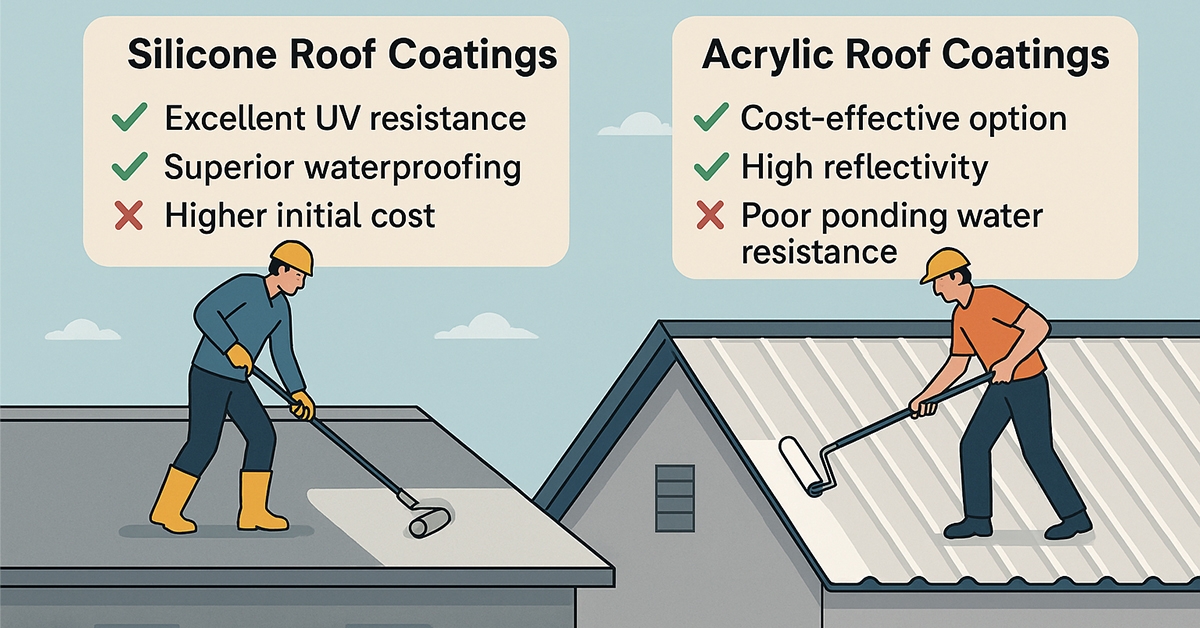
We install silicone on most of the roofs we restore, so treat what follows with appropriate suspicion — and then read the limitations section, which is the half most contractors leave out. Silicone is the best fluid-applied coating made for ponding water and UV. It is also the most expensive, it gets dirty, and it is genuinely slippery when wet. Here is both sides.
Pros
- Excellent waterproofing
- Handles ponding water
- Superior UV resistance
- Long lifespan (15-20 years)
- Energy savings up to 35%
- Seamless application
- Usually deductible in year one (confirm with your CPA)
Cons
- Higher initial cost
- Can attract dirt
- Slippery when wet
- Limited color options
- Requires professional install
- Not for steep slopes
The Advantages in Detail
1. Unmatched Waterproofing
Silicone repels water by nature rather than by coating thickness. Other systems slowly take on moisture and lose performance as they do; silicone waterproofs as well in year eighteen as in week one.
2. Ponding Water Resistance
This is the one that decides most jobs. Acrylic is water-based, so where water stands for days it softens and slowly re-emulsifies — it dissolves back toward the state it was sprayed in. Silicone is untouched by it. If your roof still holds water 48 hours after rain, this single property rules out most of the alternatives.
3. UV Stability
Silicone doesn't break down under UV exposure like other coatings. This means it maintains its reflectivity and protective properties for decades, not just years.
4. Energy Efficiency
White silicone coatings can reflect up to 85% of solar radiation, dramatically reducing cooling costs. Many building owners report 20-35% reductions in summer energy bills.
5. Single-Coat Application
Unlike acrylics that require multiple coats, silicone can often be applied in a single coat, reducing labor costs and application time.
The Limitations Explained
1. Higher Upfront Cost
Roughly double the price of acrylic per gallon, and that is a real disadvantage, not a rounding error. It pays back over time — longer life, single-coat application, no early recoat — but if you are selling the building in three years, acrylic may genuinely be the better commercial decision. Compare the systems side by side before you spend.
2. Dirt Pickup
Silicone holds dirt. Waterproofing is unaffected, but a gray roof reflects less sunlight than a white one, so some of the energy saving erodes as it soils. Washing it restores most of that, which is why cleaning is on the maintenance schedule rather than an optional extra.
3. Slippery Surface
Wet silicone is genuinely slippery — this is a safety matter, not a preference. If maintenance staff service rooftop units in the rain, we broadcast a non-slip aggregate into the coating along the walking routes, or build in marked walkways. Decide this before we spray, not after.
4. Color Limitations
Silicone coatings are most effective in white or light gray. Darker colors are available but reduce energy-saving benefits.
5. Professional Installation Required
Almost every coating failure traces back to preparation, not product. Silicone will not bond to a dirty, damp or chalky roof, and applying it too thin quietly voids the warranty you are paying for. Manufacturers only warrant work by certified crews, which is the practical reason this is not a DIY job. See what proper preparation involves.
Is Silicone Right for Your Roof?
Silicone roof coatings are an excellent choice for:
- Flat or low-slope commercial roofs
- Buildings in humid climates or areas with heavy rainfall
- Roofs with ponding water issues
- Building owners seeking long-term solutions
- Those prioritizing energy efficiency
Silicone may not be the best choice for:
- Steep-slope roofs (above 2:12 pitch)
- Roofs with heavy foot traffic (without modifications)
- Very tight budgets where acrylic might suffice
- Temporary or short-term solutions
Get an Expert Opinion
Send us the address. We will look at ponding, substrate and how long you plan to hold the building — and tell you if acrylic is the smarter buy.
Get a Free Assessment